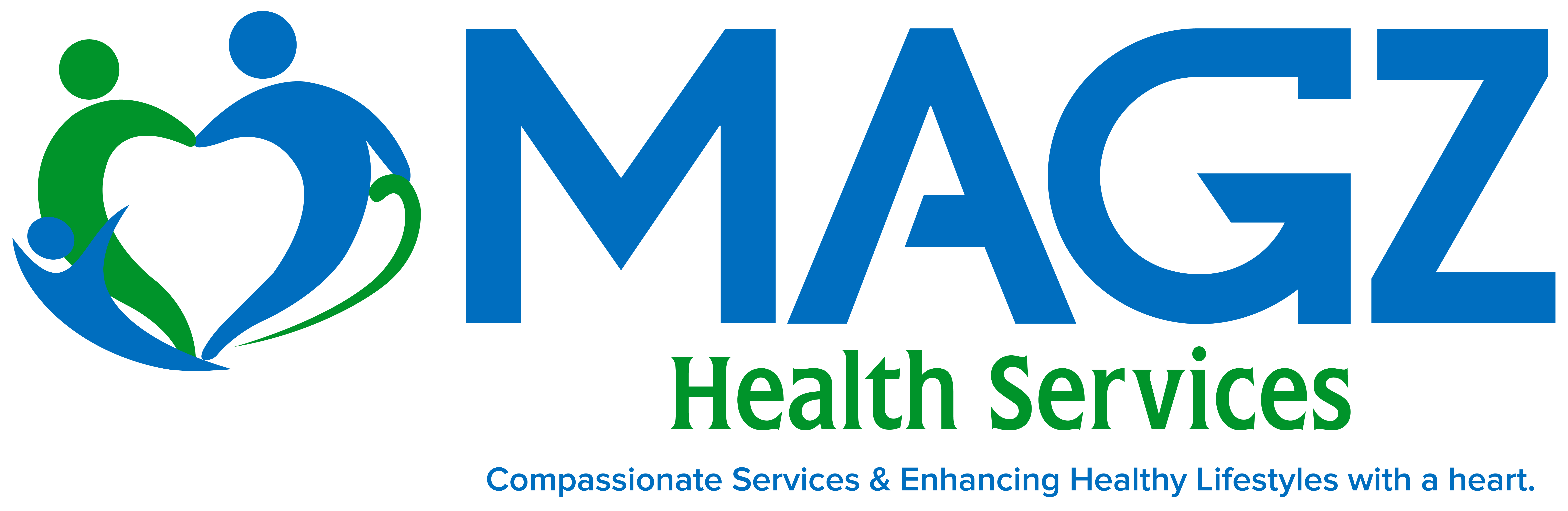
Know Your Numbers. Take an Active Role in Your Heart Health.
Self-measured blood pressure monitoring can help individuals better understand their blood pressure between healthcare visits and share useful information with their healthcare team.
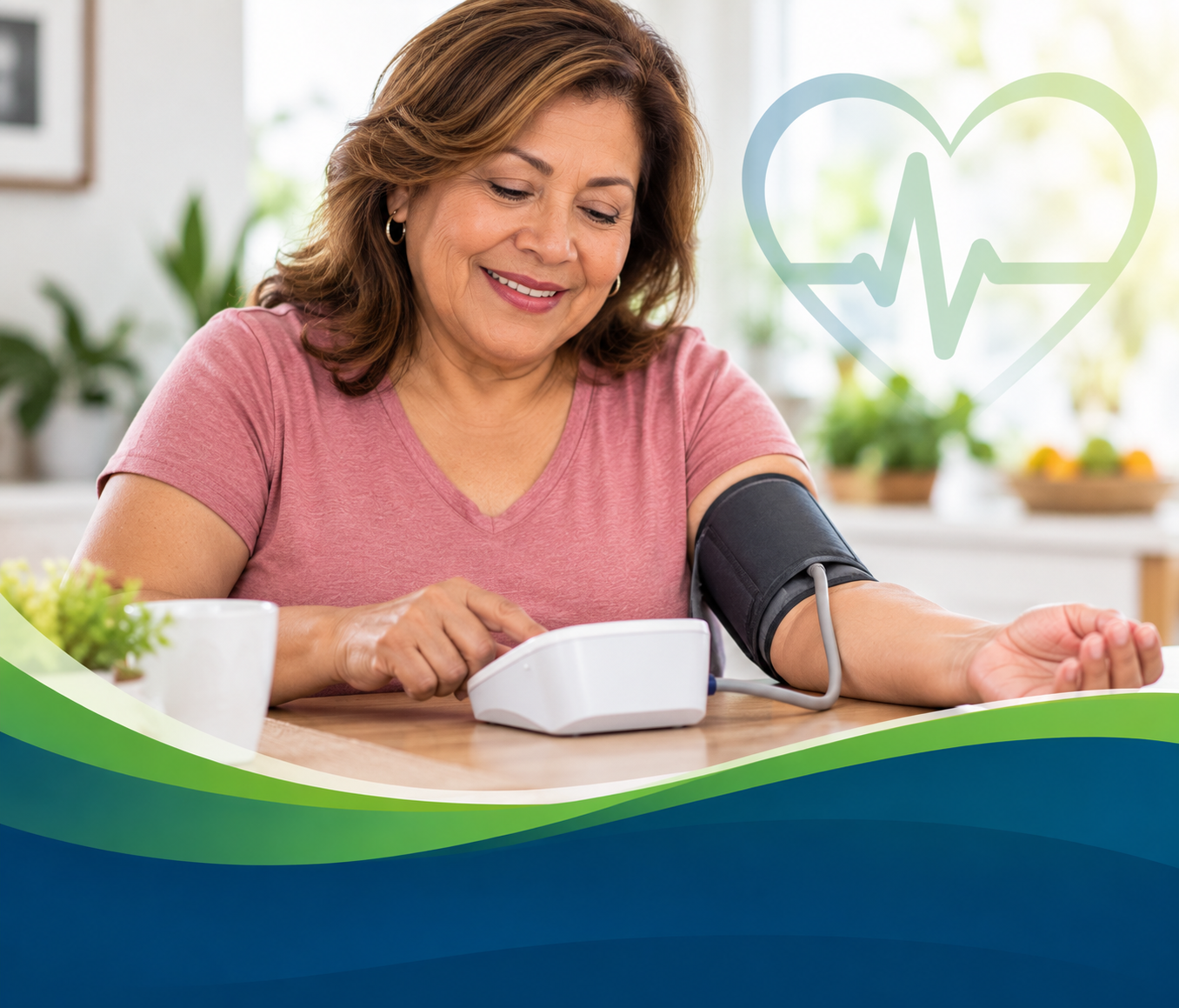
What Is Self-Measured Blood Pressure?
Self-measured blood pressure, commonly called SMBP, is the regular measurement of blood pressure by an individual outside of a doctor's office or hospital, typically using a personal blood pressure monitor at home.
Regular home measurements can provide additional information about blood pressure over time. Individuals should work with their healthcare professionals to understand how often to measure, what their readings mean, and how those readings should be used as part of their care.
More Than a Single Blood Pressure Reading
Blood pressure can vary throughout the day. Measuring it correctly and consistently at home can give you and your healthcare team additional information about your blood pressure outside of a clinical setting.
Build Awareness
Learn more about your blood pressure and recognize patterns in readings taken over time.
Measure Accurately
Proper positioning, cuff size, preparation, and measurement technique all matter.
Share Your Readings
Keep a record of your measurements and discuss the results with your healthcare professional.
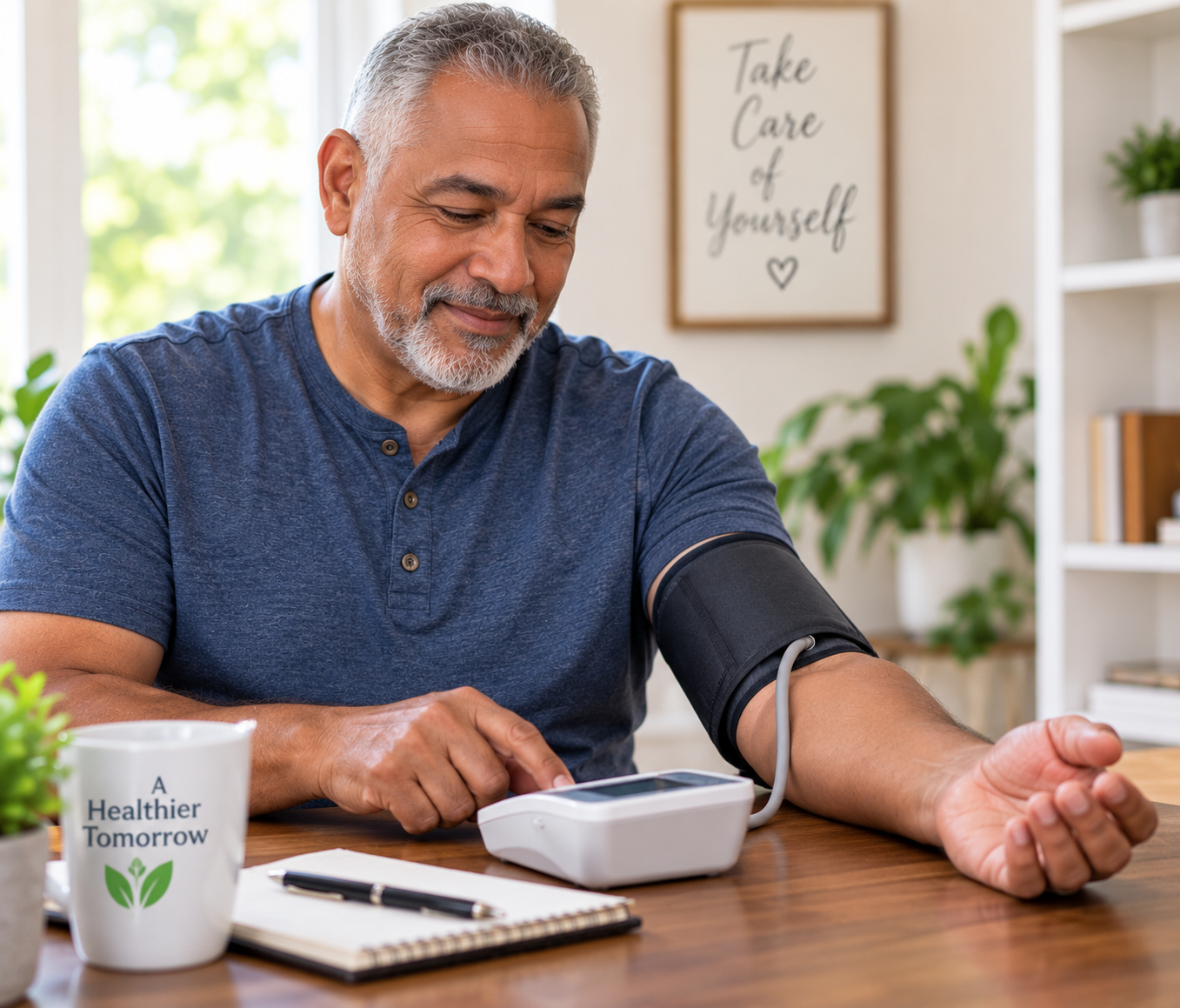
Getting an Accurate Blood Pressure Reading
Accurate technique is important. Follow the instructions provided with your monitor and any directions from your healthcare professional.
Avoid exercise, smoking, and caffeinated beverages for at least 30 minutes before measuring.
Empty your bladder and sit quietly for at least five minutes before taking a reading.
Sit with your back supported, feet flat on the floor, and legs uncrossed.
Place the cuff on bare skin and support your arm on a flat surface at heart level.
Stay still and do not talk while your blood pressure is being measured.
Record your readings and share them with your healthcare professional.
Two Numbers. Important Information.
A blood pressure reading contains a systolic number and a diastolic number. Your healthcare professional can help you understand what your readings mean for your individual health and care.
SMBP Education & Community Support
MAGZ Health Services supports community awareness and education around blood pressure, heart health, and self-measured blood pressure monitoring.
Our role is educational. We help community members build knowledge, learn proper measurement practices, and connect with trusted health information and resources.
Practical information about blood pressure, heart health, and prevention.
Education on preparing for and taking an accurate home blood pressure measurement.
Helping participants better understand blood pressure terminology and trusted information.
Connecting individuals with appropriate health information and community resources when needed.
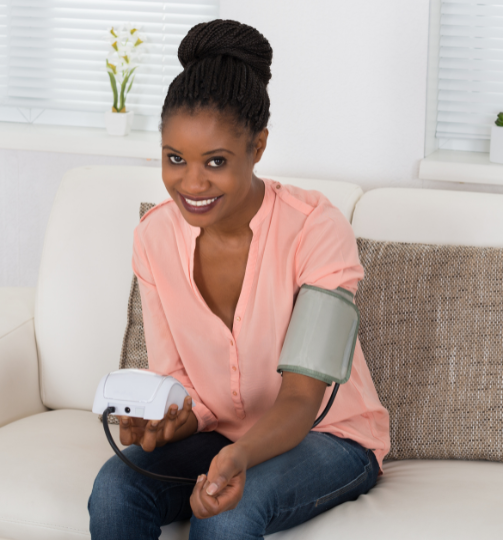
Supporting Self-Measured Blood Pressure Education for Women
The U.S. Department of Health and Human Services Office on Women's Health developed the Self-Measured Blood Pressure Champion initiative to help expand awareness and education around blood pressure self-monitoring and women's heart health.
MAGZ Health Services participates as an SMBP Program Champion and supports community education that encourages individuals to better understand blood pressure, learn appropriate self-monitoring practices, and communicate their readings with healthcare professionals.
Learn About the OWH Initiative →Learn More About Blood Pressure
Explore trusted national health resources for more information about blood pressure, home monitoring, heart health, and women's health.
Centers for Disease Control and Prevention
Learn how blood pressure is measured and review guidance for taking accurate measurements outside a clinical setting.
Visit CDC →American Heart Association
Find information about blood pressure, home monitoring, heart health, and understanding blood pressure readings.
Visit American Heart Association →Office on Women's Health
Explore federal women's health information and resources, including education related to cardiovascular health.
Visit Office on Women's Health →MAGZ Health Services provides health education, wellness information, and community resource connections. Self-measured blood pressure education is not a substitute for medical diagnosis, treatment, or individualized medical care. Do not change medications or treatment based solely on home blood pressure readings. Discuss your readings and personal health concerns with a qualified healthcare professional. If you believe you are experiencing a medical emergency, call 911.
Bring Blood Pressure Education to Your Community
Interested in heart-health education, an SMBP presentation, or community wellness programming? Connect with MAGZ Health Services to discuss opportunities for your organization, residential community, church, senior group, or community program.
Contact MAGZ Health Services →Promoting healthier communities through health education, community programs, training, and trusted resources.