
At MAGZ Health Services, we’re on a mission to empower our communities with knowledge that saves lives. One of the biggest silent threats to your health? Sodium.
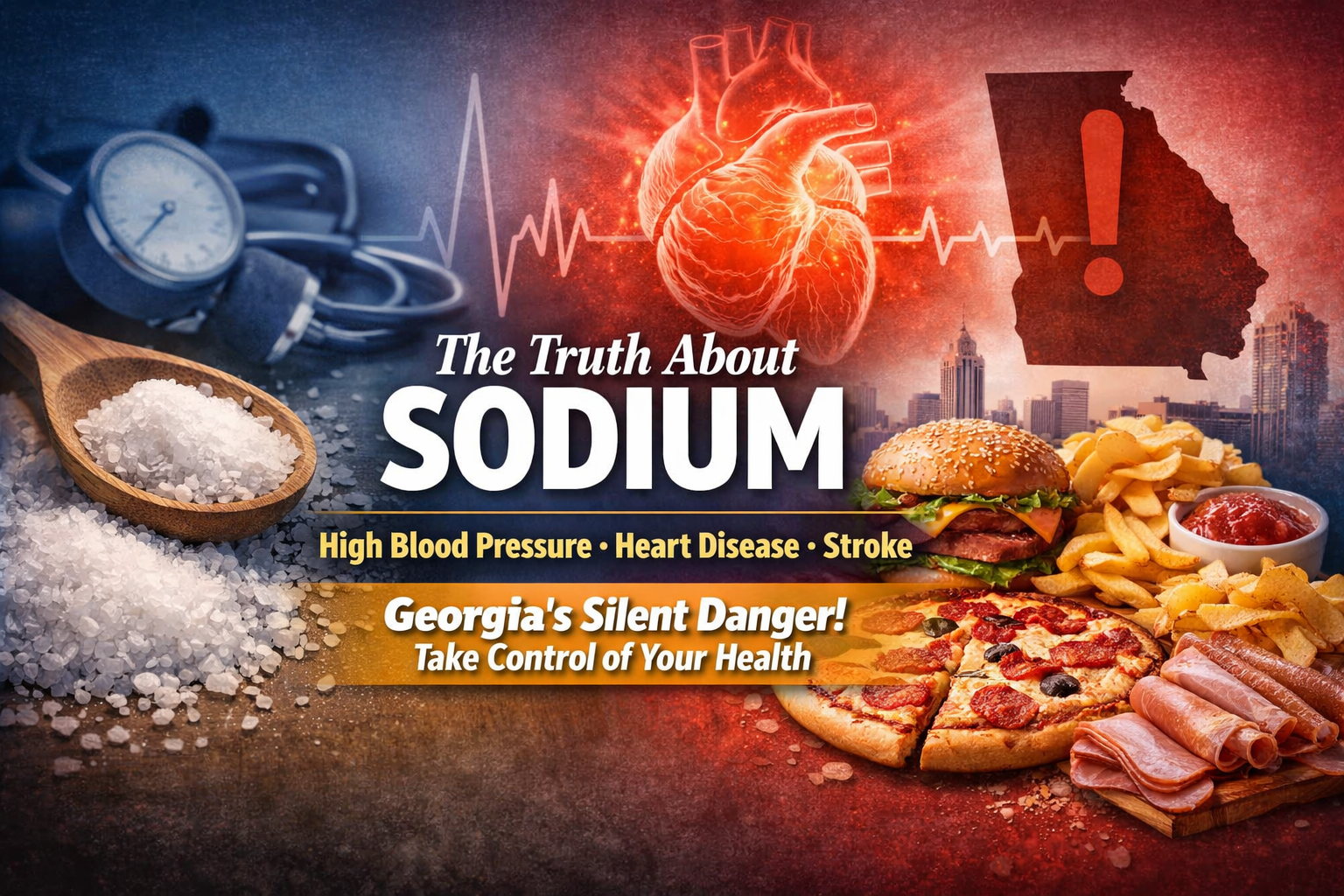
Yes—salt might make your food taste better, but too much can seriously impact your health, especially here in Georgia, where the toll of heart disease is too high.
Why Sodium Matters: The Georgia Wake-Up Call
Did you know that high sodium intake is directly linked to high blood pressure, heart disease, and stroke—all leading causes of preventable death in our state? In fact, Georgia spends a staggering $8.5 billion on heart disease healthcare costs every year. But here’s the powerful truth: some of these costs—and lives—can be saved.
How? By lowering sodium, moving more, and ditching tobacco.
So… Where’s All This Sodium Coming From?
Short answer: everywhere.
According to the CDC, FDA, HHS, and USDA, most of the sodium we eat doesn’t come from your saltshaker. It’s already in your food before you even sit down to eat.
Over 75% of the sodium in the American diet comes from packaged, processed, and restaurant foods.
Foods labeled “healthy” can still be sneaky high in sodium—so reading labels is a must.
How Much Is Too Much?
The U.S. Dietary Guidelines say people over age 2 should consume less than 2,300 mg of sodium per day.
Some groups should aim for even less—no more than 1,500 mg per day, including:
- Adults age 50 and up
- African Americans (who face a disproportionate burden of high blood pressure and heart disease)
- Anyone living with hypertension, diabetes, or kidney disease
Sound like you or someone you love? You’re not alone—and there are steps you can take.
Simple Steps to Cut Sodium—Without Cutting Flavor
Here’s how to take back control of your health—starting today:
✅ Read the Nutrition Facts label
✅ Compare products before buying
✅ Choose “low sodium” or “no salt added” options
✅ Ask for sauces and dressings on the side when eating out
✅ Limit takeout and fast food
✅ Cook more meals at home using fresh ingredients
👉 Because sodium is often added during processing, you can’t remove it after the fact—so start with lower-sodium choices from the start.
Small Changes, Big Impact
Cutting down sodium is not just about personal choice—it’s about community health. That’s why MAGZ Health Services is dedicated to outreach, education, and making healthier food options more accessible.
We’re here to support you—right in your neighborhood. Because your health matters, and together, we can make a difference.
Want to Learn More?
Visit these resources to get expert-backed guidance:
Let’s Take Action Together 💬
🧂 On a scale of 1–10, how aware were you of sodium in your daily food? Comment below!
💾 Save this for your next grocery run.
📲 Share this post to raise awareness in your group chat—don’t let them stay in the dark!
📞 Got questions or need help improving your family’s nutrition? Contact us today!
📣 MAGZ Health Services
🌐 magzhealthservices.org
📧 MAGZHealthServices@gmail.com
📞 Tel:
Sources
- Centers for Disease Control and Prevention (CDC)
- U.S. Food and Drug Administration (FDA)
- U.S. Department of Health and Human Services (HHS)
- U.S. Department of Agriculture (USDA)
- Georgia Department of Public Health (Updated Jan 14, 2026): DPH Georgia Sodium